(844) 893-7326

Hail Damage? Get a Free Roof Inspection

Most hail damage never shows from the ground. Bruised mats and cracked shingles sit quietly for months, then leak after a hot Texas summer bakes the exposed fiberglass. A free inspection tells you what is actually up there — before your claim window closes.

Call (844) 893-7326

HAAG Certified Inspector — your roof is assessed using the same Haag Engineering damage-assessment standard that insurance adjusters are trained on, so the damage is documented the way a claim file expects to see it.

Get My Free Inspection

We'll call you within minutes. No spam, ever.

How the Insurance Claim Works

  1. 1

    Free inspection with photo report

    We walk the roof, document every slope, and email you the photos the same day.

  2. 2

    We document damage for your claim

    Hit counts, collateral damage and verified storm data packaged the way adjusters expect.

  3. 3

    We work with your insurance adjuster

    We meet them on site at no charge and translate the scope sheet into plain English.

4.9 stars from 97 Google reviews
GAF Certified Contractor
Locally owned in DFW
Free inspections

Manufacturer Credentials

  • GAF Certified Contractor · Certified

    Factory-certified installer of GAF roofing systems

  • HAAG Certified Inspector · Certified Inspector

    Trained and certified by Haag Engineering in residential and commercial roof damage assessment

Insurance Claim Windows Don't Stay Open

Texas policies give you a limited period from the date of loss to file, and the longer you wait the harder it is to prove the damage came from that storm rather than normal wear. Documenting the roof early costs you nothing and protects the claim if you ever need it.

Call (844) 893-7326

Hail Damage Questions, Answered

How do I know if I have hail damage?

Most hail damage is invisible from the ground. Look for dented gutters, downspouts, vents or A/C fins, and granules collecting at the bottom of downspouts. On the roof itself, hail leaves bruised shingles with a soft, crushed mat that only shows up on a close-up inspection.

Will my insurance cover it?

Most Texas homeowner policies cover sudden hail and wind damage, subject to your deductible. Coverage depends on whether your policy pays replacement cost or actual cash value, and on documenting that the damage came from a storm. Our photo report is built to give your adjuster exactly what they need.

Will my premium go up?

A hail claim is a weather event, not an at-fault claim, so it is treated differently from a liability claim. Carriers set rates regionally after major storms, which can affect everyone in an area whether they file or not. We can walk you through the tradeoffs before you decide to file anything.

What does the inspection cost?

Nothing. The inspection, the photo report and the written estimate are all free with no obligation. If we do not find storm damage, we will tell you that plainly and let you know when the roof should be looked at again.

Testimonials

What Our Clients Say

"They dont play !! These guys are awesome, did an outstanding job, well past expectations, communication was good, they will also work with your insurance company if needed."

James Leon

DFW

4.9 out of 5 · 97 Google reviews

Read all reviews on Google

Shingle lines we install

Product lines available through American Dream Roofing. Browse colors and specs for each line.

Recent Work

Every roof below is our own completed work across the Dallas–Fort Worth metroplex — our crews, our photos. Each one shows the system we installed and how that material holds up to North Texas hail, heat and wind.

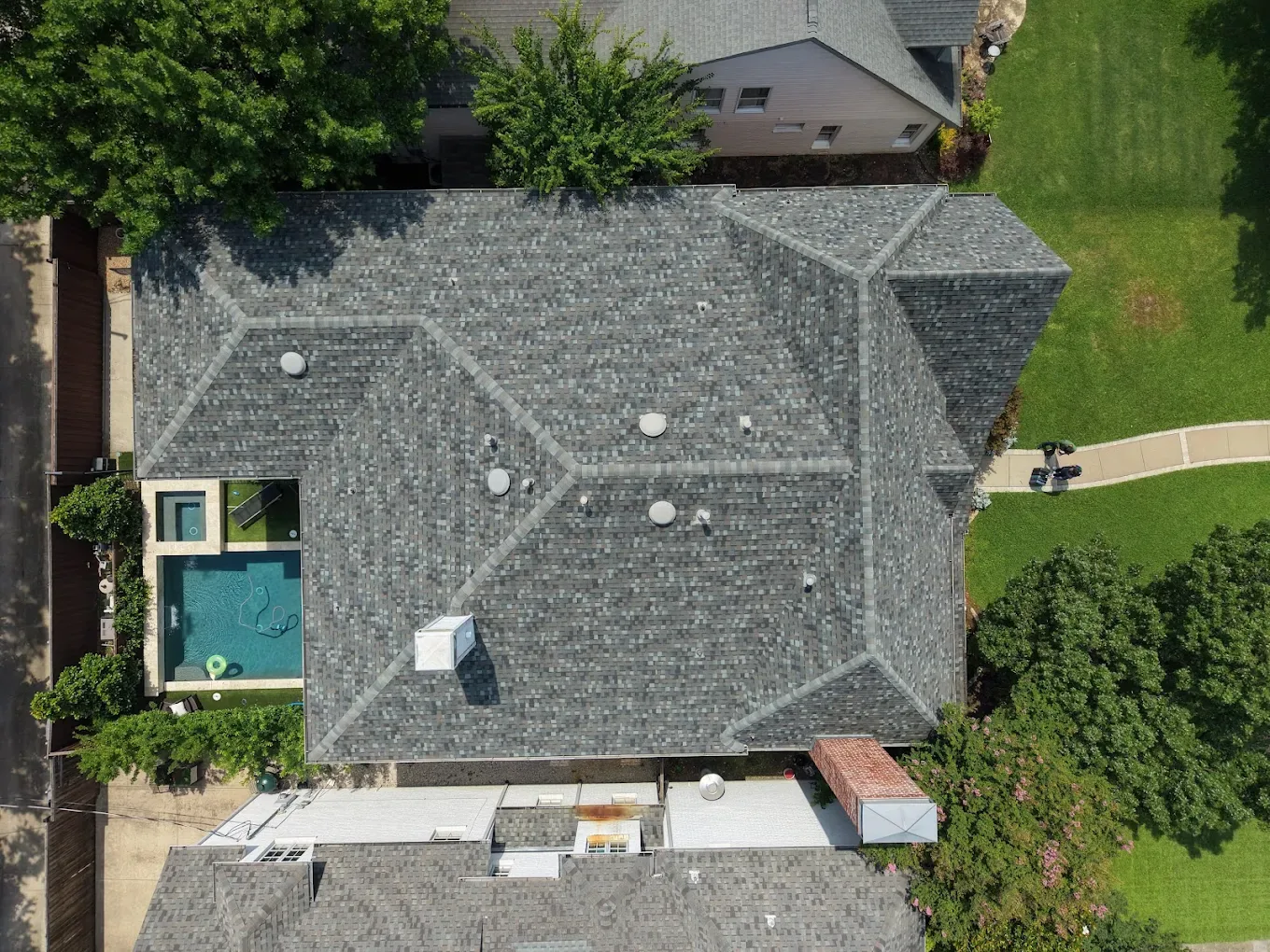
Overhead drone view of a completed architectural shingle roof on a large Dallas–Fort Worth home with a pool

Architectural Shingle Replacement

Dallas–Fort Worth · Roof Replacement · Architectural asphalt shingles

Overhead view of a completed architectural shingle replacement across a complex hip roof with multiple ridges, valleys and vent penetrations. Architectural (laminated) asphalt is the DFW workhorse: multiple mat layers give it dimensional shadow and far better wind performance than three-tab. Impact-resistant Class 4 versions are available from every major manufacturer and often qualify for a Texas carrier premium discount, which makes this the sensible choice on large, complicated roof planes.
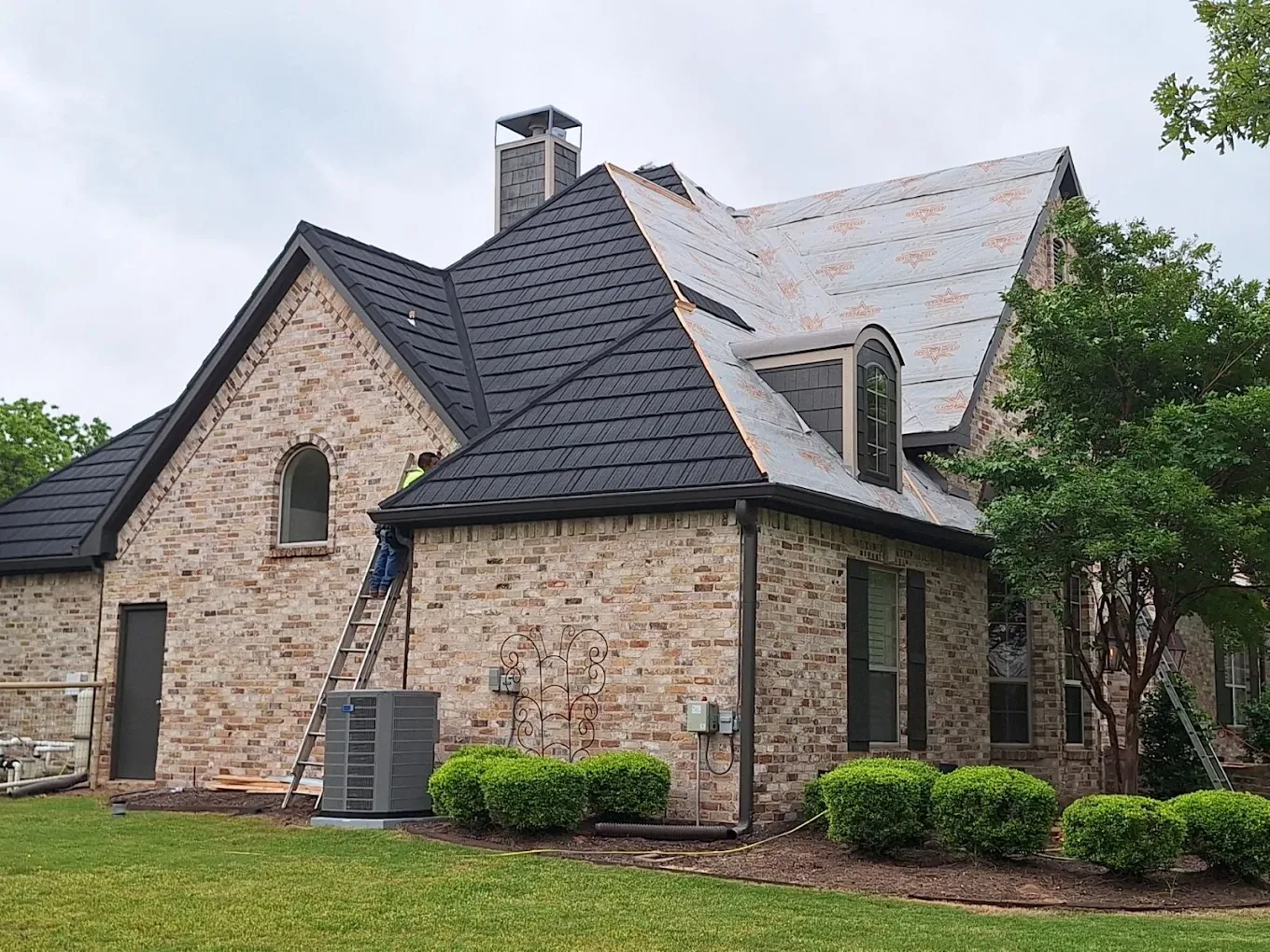
Metal shake roof replacement in progress on a brick home, finished black panels on one elevation and synthetic underlayment exposed on the other

Metal Shake Roof Replacement — In Progress

Dallas–Fort Worth · Roof Replacement · Metal shake panels

Mid-replacement on a brick two-story: finished black metal shake on the completed elevations, synthetic underlayment down and dried-in on the slopes still to be covered. Metal shake panels give the deep shadow line of cedar without the splitting, curling or fire risk cedar has in Texas heat. Panels interlock on all four sides, so uplift resistance stays high in spring storm winds, and the reflective finish sheds summer heat load better than dark asphalt.

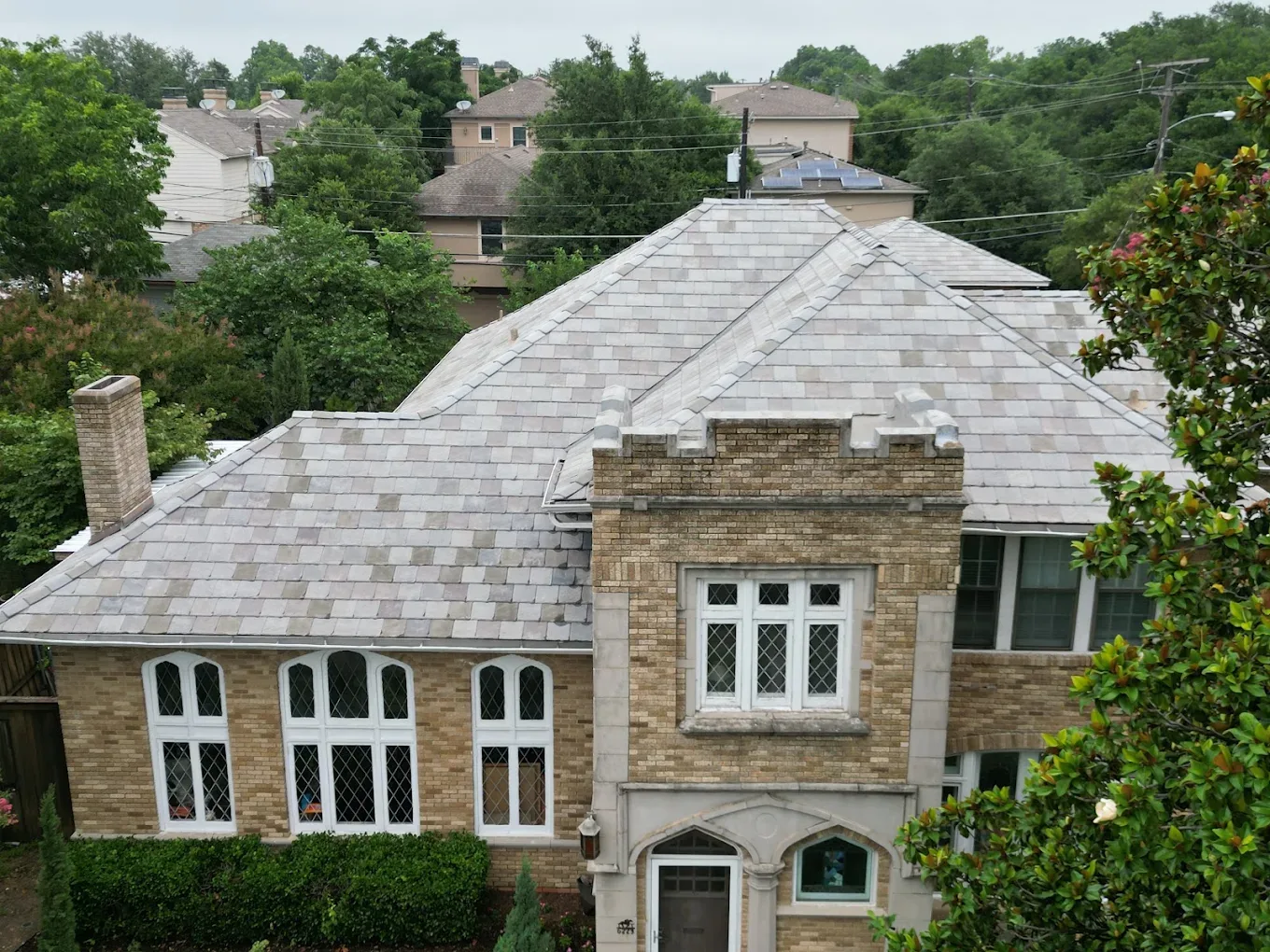
Multi-tone synthetic slate roof on a Tudor-style brick home in Dallas–Fort Worth

Synthetic Slate Roof

Dallas–Fort Worth · Roof Replacement · Synthetic slate

Multi-tone synthetic slate on a Tudor-style brick home, laid in a blended pattern across steep hips and dormers. Synthetic slate is molded polymer with UV and impact modifiers, so it delivers the thickness and colour variation of quarried slate at roughly a quarter of the weight and without the deck reinforcement natural slate demands. The class is commonly Class 4 rated and holds colour through Texas UV, suiting steep architectural roofs and HOA-controlled neighbourhoods.

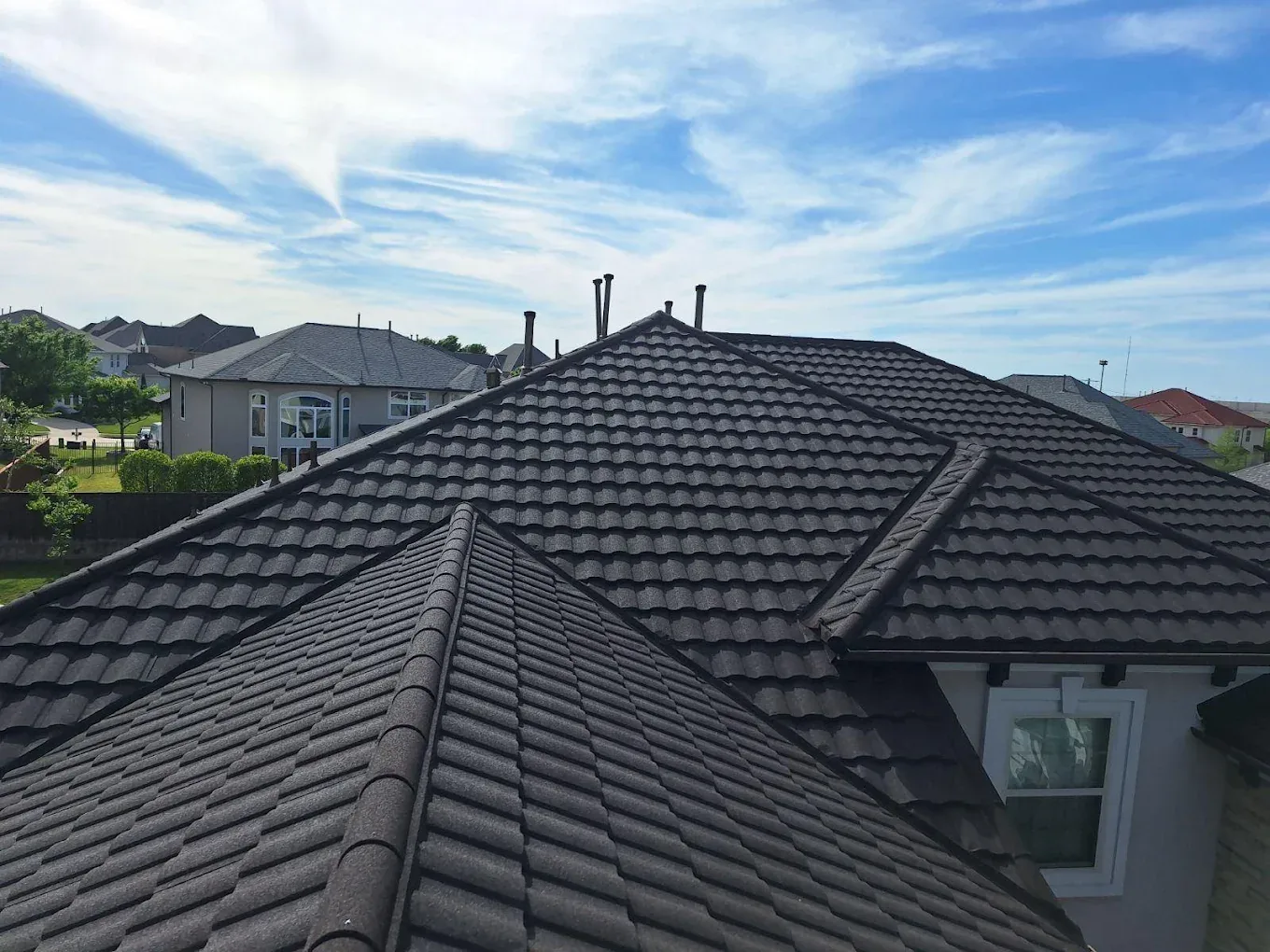
Charcoal stone-coated steel tile roof with hip and ridge caps on a two-story Dallas–Fort Worth home

Stone-Coated Steel Tile Roof

Dallas–Fort Worth · Roof Replacement · Stone-coated steel, tile profile

A full stone-coated steel tile system in charcoal, with finished hip and ridge caps and boots on every vent stack. Stone-coated steel is a light-gauge steel panel with an acrylic-bonded stone granule surface: it reads as tile from the street but weighs a fraction of concrete or clay, so it rarely needs structural reinforcement. The class typically carries Class 4 impact resistance and high wind ratings, which is why it suits North Texas hail alleys and homeowners who want a 40-plus-year system.

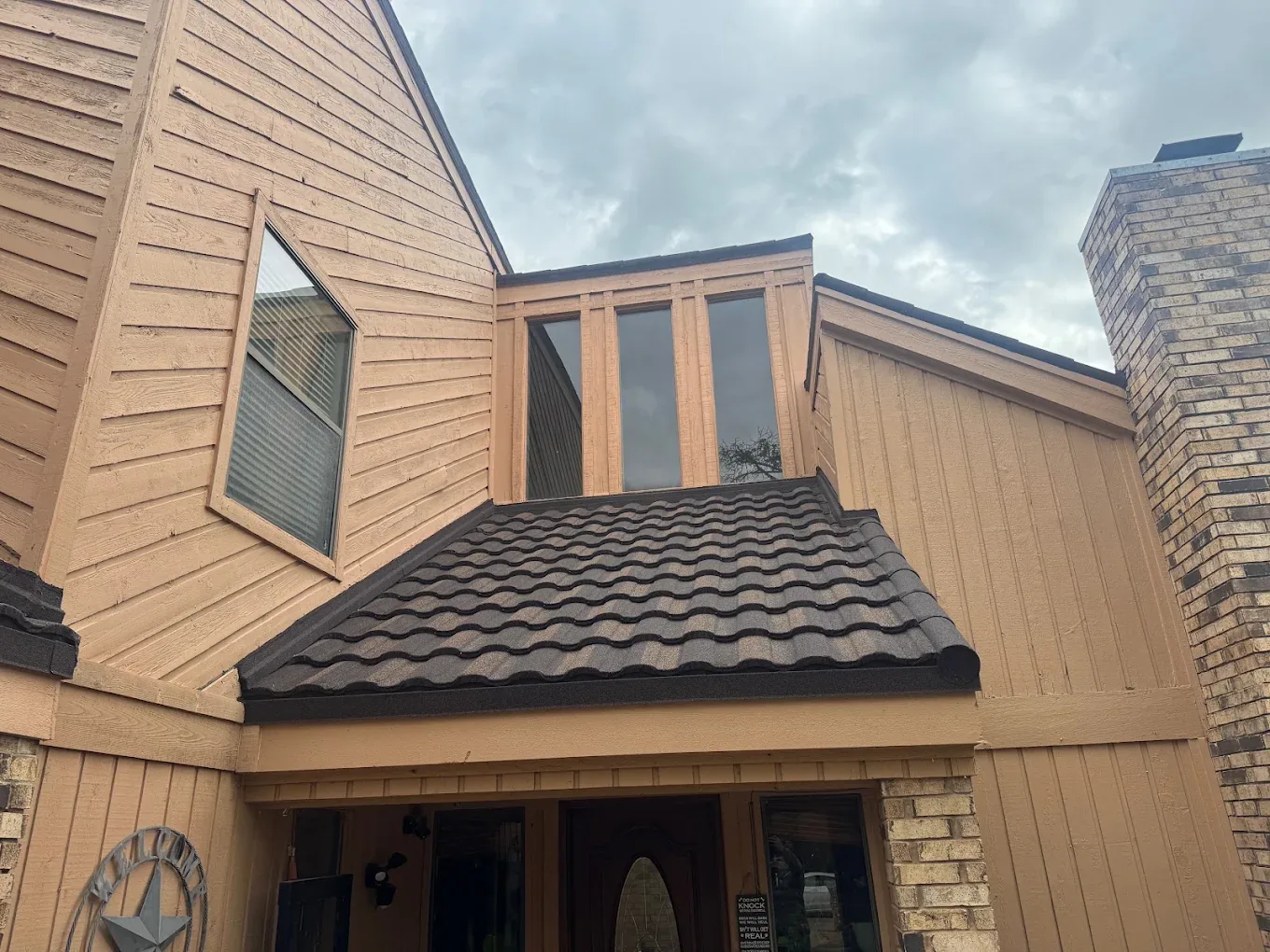
Dark stone-coated steel barrel tile roof over the entry of a Dallas–Fort Worth home

Stone-Coated Steel Barrel Tile

Dallas–Fort Worth · Roof Replacement · Stone-coated steel, barrel tile profile

Stone-coated steel in a barrel tile profile over the entry elevation, with finished eave trim and hip caps. The barrel profile gives the Mediterranean look of clay without clay's weight or its tendency to crack underfoot and under hail. Batten-mounted steel panels create an air gap above the deck that cuts attic heat gain in July, and the class's Class 4 impact and high wind ratings make it a durable option for exposed elevations.

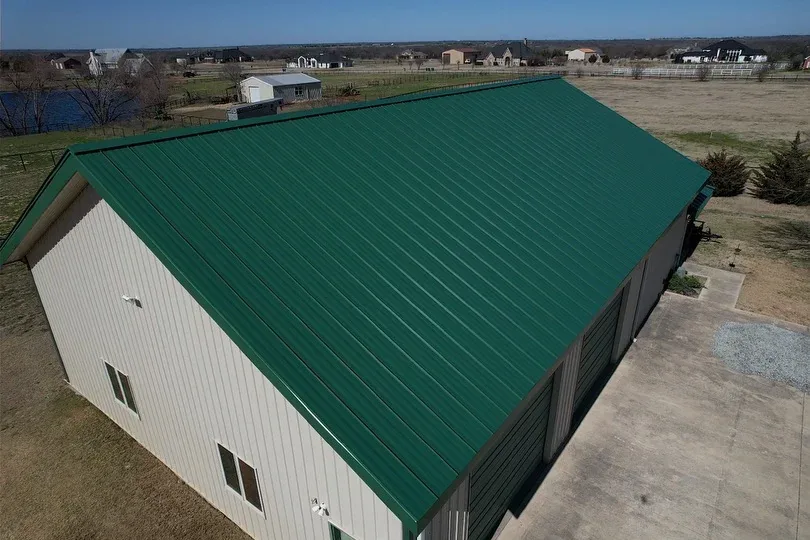
Green metal roof on a shop building on acreage outside Dallas–Fort Worth

Metal Roof — Shop Building

Dallas–Fort Worth · Commercial / Agricultural Roofing · Standing seam metal panels

A full metal roof on a shop building, panels running unbroken from ridge to eave across the span. Standing seam conceals its fasteners in the raised seam, so there are no exposed screws or neoprene washers to back out and leak the way an exposed-fastener panel does after a decade of thermal cycling. Clips let the panels expand and contract through Texas temperature swings, which is what makes the system suitable for wide agricultural and light-commercial spans.

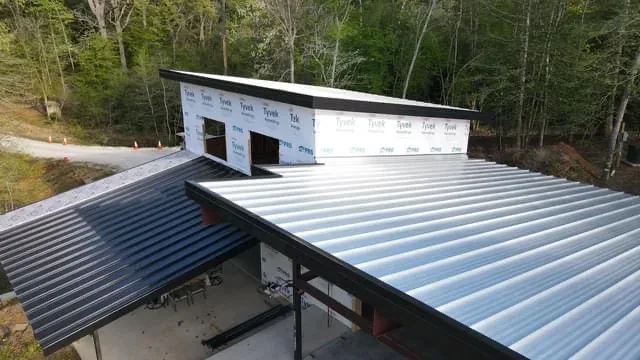
Corrugated metal roof panels being installed on a new steel-framed building

Metal Roof — New Construction

Dallas–Fort Worth · New Construction Roofing · Corrugated metal panels

Corrugated metal panels going on over a new steel-framed structure, with the walls still in house wrap. Exposed-fastener corrugated is the economical metal option: panels screw straight through into purlins, so it installs fast and covers large areas cheaply, which is why it dominates barns, shops and light commercial new builds. Trade-off versus standing seam is maintenance — fastener washers are the wear point and want inspection every few years in this climate.