TPO Roof Repair: A Property Manager's Guide to Extending Roof Life and Avoiding Emergency Replacement
Most TPO roof failures are preventable. Here's what property managers should watch for, and how a maintenance-first approach protects NOI and avoids surprise capital expenses.
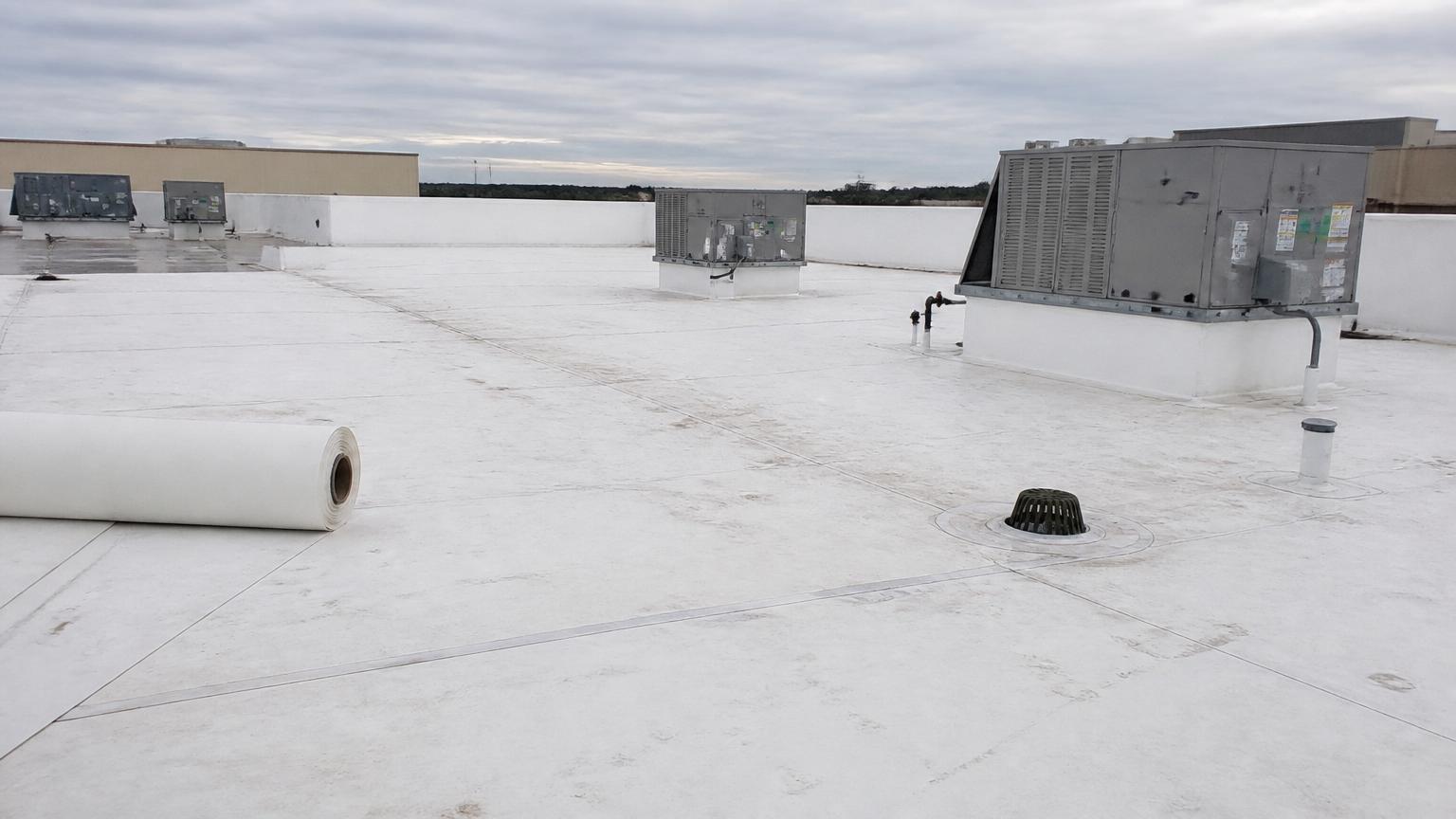
TPO (thermoplastic polyolefin) is the most common low-slope commercial roofing membrane in North Texas — used across strip retail, garden-style apartment buildings, office parks, and industrial flex space. Properly maintained, a TPO roof reasonably delivers 20-25 years of service. Poorly maintained, the same membrane can develop leaks within 5-7 years. The difference is almost always maintenance, not the material itself.
Where TPO Roofs Actually Fail
In our experience servicing commercial and multi-family properties across DFW, the overwhelming majority of TPO leaks trace back to a small set of causes: seam separation at heat-welded joints that were under-welded during original installation, flashing failures around HVAC curbs, pipe penetrations and parapet walls, ponding water that accelerates membrane degradation, and mechanical damage from other trades walking the roof for HVAC service without protection boards. Very rarely is the field membrane itself the point of failure.
Repair vs. Replace: How to Decide
A property manager doesn't need to become a roofing expert, but understanding the decision framework helps when a contractor recommends full replacement. Key questions: What percentage of the roof's total seams show separation? Is ponding water isolated to a few low spots or widespread across the deck? Is the membrane still adhered or mechanically fastened securely, with only isolated flashing failures? A roof with isolated issues, even multiple isolated issues, is usually a repair candidate. A roof with widespread seam failure, membrane shrinkage, or deck-level moisture intrusion (confirmed by an infrared moisture scan) is a replacement candidate regardless of remaining "warranty years."
The Cost of Reactive-Only Maintenance
Buildings on a "call us when it leaks" model consistently pay more over a 15-year period than buildings on a scheduled maintenance program — emergency leak calls cost more per visit, interior damage from delayed repairs adds unbudgeted expense, and small deferred issues compound into full-field failures. A basic semi-annual inspection program with minor repair authority (sealing small seam separations, re-securing loose flashing, clearing drains) typically costs far less annually than a single emergency call plus resulting interior repairs.
What to Ask Your Roofing Contractor
Request a written condition report with photos after every inspection, not just a verbal "looks fine." Ask whether seam integrity was tested (probing or seam pull test), not just visually inspected. Confirm drains and scuppers were physically cleared, not just observed. And ask for a multi-year budget projection — a responsible commercial roofer can tell you approximately when full replacement will be needed, so it's a planned capital expense rather than an emergency one.
American Dream Roofing provides TPO inspection, repair, and replacement across DFW, with maintenance programs designed around property management and HOA budget cycles. Learn about our commercial roofing programs or call (844) 893-7326.